Key Takeaways
- The Mardi Himal Trek passes through authentic Gurung and Magar villages, offering real cultural experiences away from crowded trails.
- Ghandruk provides rich cultural insight with traditional homes, local museums, and daily village life.
- The trail features monasteries, mani walls, and prayer flags, showing strong Tibetan Buddhist influence in the region.
- Trekking during Dashain, Tihar, or Losar adds vibrant cultural celebrations to the journey.
Table of Contents
The Mardi Himal Trek offers cultural experiences that go well beyond a typical mountain walk. Trekkers on this route pass through living Gurung and Magar villages, visit active Buddhist monasteries, eat traditional Himalayan food prepared by families who have cooked the same dishes for generations, and walk through a landscape layered with prayer flags, mani walls, and centuries of mountain culture. It is one of the few treks in the Annapurna region where the cultural journey and the mountain journey carry equal weight.
The Mardi Himal Trek as a Cultural Journey, Not Just a Mountain Trek
While many trekkers are drawn to the Mardi Himal Trek for the stunning mountain views of Mardi Himal, Machapuchare, and the Annapurna massif, its cultural dimension often leaves the deepest impression.
The lower and mid-altitude villages retain living traditions that the Annapurna Circuit, with its crowded lodges and road-accessible villages, has largely lost. Trekkers who engage with local life gain a genuine cultural experience alongside the natural beauty, as detailed in this Mardi Himal Trek Highlights.
.Why the Mardi Himal Region Remains Culturally Authentic
The Mardi Himal Trek opened to foreign trekkers later than the Annapurna Circuit and Poon Hill routes. Because of this, villages along the trail have not been transformed by mass tourism.
Teahouses remain family homes rather than commercial lodges. Village elders wear traditional Gurung attire on everyday occasions, and children learn traditional songs in community gatherings instead of from screens. The trail offers a glimpse into Gurung and Magar life that is authentic and continuous with history not staged for visitors.
The Two Communities at the Heart of the Trail: Gurung and Magar
The Mardi Himal Trek passes through the homelands of two distinctive hill communities: the Gurung and the Magar.
The Gurung people, also called Tamu, dominate the lower and mid-altitude villages like Ghandruk, Lwang, and Siding. The Magar share overlapping areas, with similar cultural traits but distinct traditions, language, and community practices.
Both communities have a long history of service in the Gurkha regiments of the British and Indian armies. This remittance culture shaped their villages’ neat stone houses, well-maintained trails, and higher literacy rates reflect the economic stability Gurkha service brought over the past century.
According to UNESCO’s documentation of intangible cultural heritage in Nepal, the Gurung community’s oral traditions and performing arts are among the most significant in the broader Himalayan cultural landscape.
Gurung Villages on the Mardi Himal Trek
Ghandruk – The Cultural Capital of the Route
Ghandruk is the cultural heart of the Mardi Himal Trek and one of Nepal’s most important Gurung villages. Located at 1,940 m above the Modi Khola valley, it offers stunning views of Annapurna South, Hiunchuli, and Machapuchare. With traditional slate-roofed stone houses, Ghandruk remains a living community rather than a tourist-focused village.
The Gurung Museum in Ghandruk showcases traditional clothing, jewellery, weapons, tools, and household items across generations. It highlights Gurung shamanic practices (Paju) and the community’s relationship with the Annapurna Conservation Area. Visiting the museum provides valuable context, enriching the cultural experience of the trail before exploring the village lanes.
Siding and Lwang – Where Daily Village Life Is Unfiltered
Beyond Ghandruk, the villages of Siding and Lwang see far fewer visitors than popular Annapurna stops.
In Siding, a small Gurung settlement of a few dozen households, trekkers witness daily life uninterrupted: women carrying fodder, men repairing stone terraces, and children walking to school. This is authentic village life, not staged for tourism.
Lwang, a slightly larger village, offers organized cultural programs through local cooperatives for trekkers seeking structured experiences. These can include cooking demonstrations, folk song and dance, and guided visits to farms and weaving workshops, arranged in advance with the village cooperative.
Traditional Gurung Architecture and Slate-Roofed Houses
Gurung villages along the Mardi Himal Trek showcase architecture that is a cultural experience in itself. Traditional houses are built from local stone, with thick walls that keep interiors warm in winter and cool in summer. Roofs use flat slate tiles, giving villages a distinctive grey-toned look from the trail.
Interiors typically have a central hearth room for cooking and gathering, separate sleeping quarters, and, in older houses, a ground-floor area for livestock. Carved wooden window frames and doorways feature motifs blending Hindu and Buddhist symbolism, reflecting the community’s syncretic religious traditions.
Gurung Culture and Traditions Along the Trail
The Rodhi Tradition – Community Life and Social Gatherings
The Rodhi is a unique cultural institution of the Gurung community. Traditionally, it served as a gathering place where young men and women met in the evenings for music, dance, courtship, and the passing of oral traditions from elders to youth.
The Rodhi functioned as a social club, performance space, courtship venue, and a means of cultural continuity. While the formal Rodhi has declined in many villages due to modernization and migration, its spirit lives on. Trekkers can still witness community gatherings and cultural performances in villages like Ghandruk and Lwang.
Traditional Gurung Dress and Handicrafts
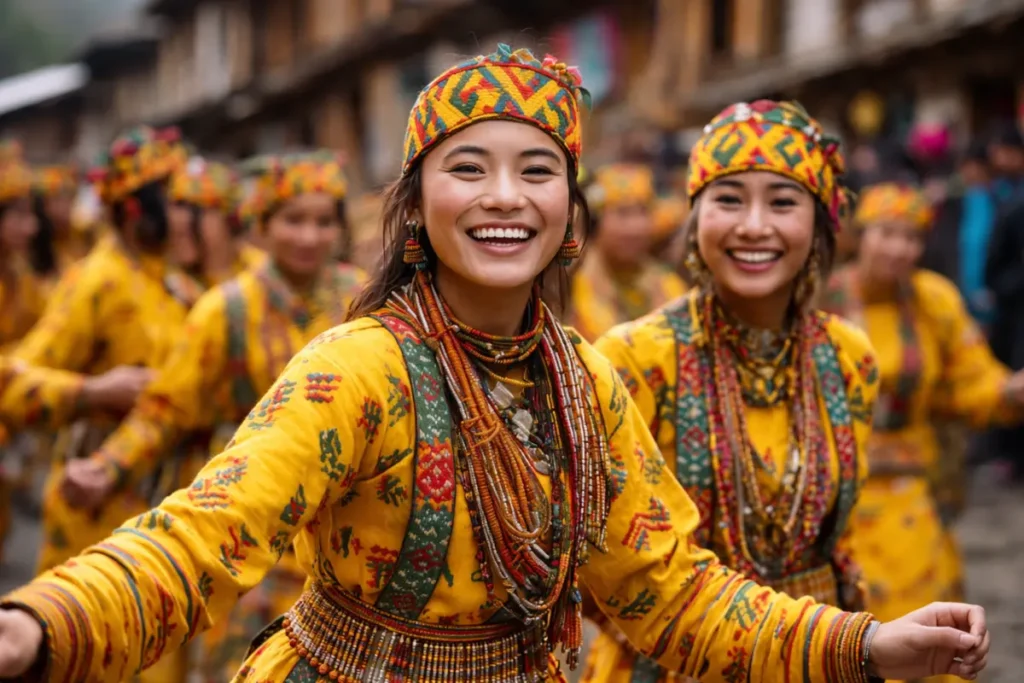
Traditional Gurung women’s clothing is among the most visually striking in Nepal. The Radi is a coarsely woven wool fabric made from local sheep wool, used for carrying cloths, prayer mats, and floor coverings. The Pakhi is a finely woven wool fabric used for ceremonial garments.
Gold and coral jewelry such as nose rings and layered necklaces are worn by older women during festivals and form an important part of Gurung cultural heritage. Trekkers visiting the Gurung Museum or attending cultural programs in Lwang can see these textiles and ornaments in context, understanding their role as symbols of community identity and history.
The Doko Basket – A Symbol of Himalayan Daily Life
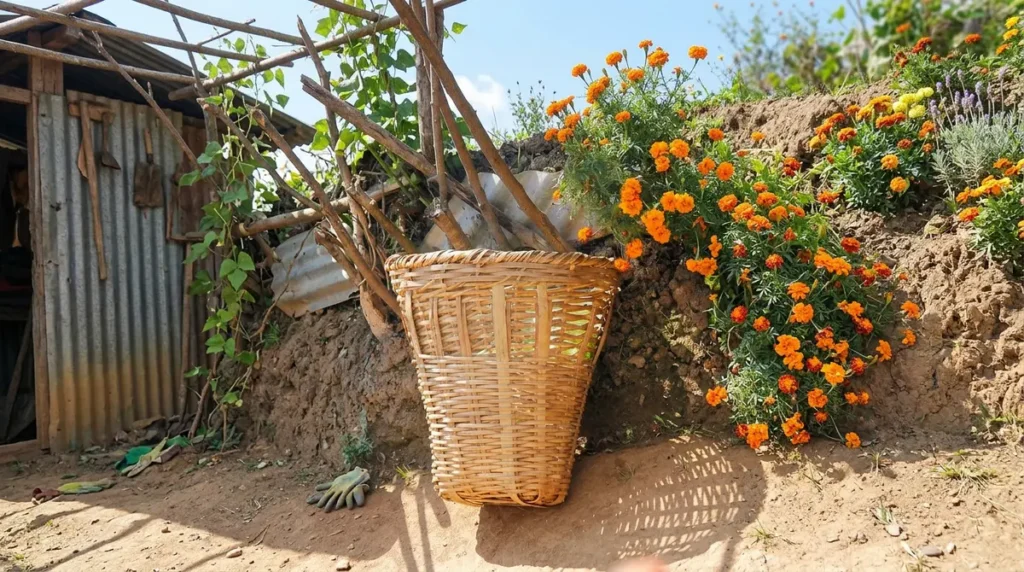
The doko is a conical wicker basket carried on the back with a namlo head strap, used for centuries as the primary load-carrying tool in hill Nepal.
On the Mardi Himal Trek, trekkers often see men and women transporting firewood, fodder, crops, and building materials between villages, fields, and forests. The doko and namlo system spreads weight across the forehead and back, allowing experienced carriers to move 40 kg or more over steep mountain trails for hours.
Watching a Gurung farmer descend a trail with a full doko, maintaining balance and pace far beyond a trekker’s ability, is one of the most quietly humbling cultural experiences on the Mardi Himal trail.
Buddhist Monasteries and Spiritual Traditions
Monasteries on and Near the Mardi Himal Route
The Annapurna foothills show a mix of religious traditions, with Hindu communities in lower valleys and Tibetan Buddhist communities at higher elevations. The Mardi Himal Trek passes through this transitional zone, and the monasteries along the trail reflect Tibetan Buddhist influence.
The Ghandruk monastery is the most accessible on the route. This modest but active gompa features thangka paintings, a central Buddha statue, and ritual objects used in daily practice. Visiting in the early morning during prayer sessions allows trekkers to experience a living monastery rather than a static exhibit.
Prayer Flags, Mani Walls, and Their Meaning
Above Forest Camp and High Camp, the Mardi Himal Trek trail is lined with prayer flags and mani walls, each with deep cultural significance.
- Prayer Flags: The five colors blue, white, red, green, and yellow—represent sky, wind, fire, water, and earth. Mantras printed on the flags are carried by the wind to bless all living beings in the surrounding area.
- Mani Walls: Built from stones carved with the Buddhist mantra Om Mani Padme Hum, these walls mark approaches to high camps and passes. Trekkers should pass with the wall on their right side as a sign of respect.
The Annapurna Conservation Area Project helps protect both the natural and cultural heritage of the Mardi Himal region, ensuring these traditions continue for future generations.
Traditional Food as a Cultural Experience
Dal Bhat – More Than Just a Meal
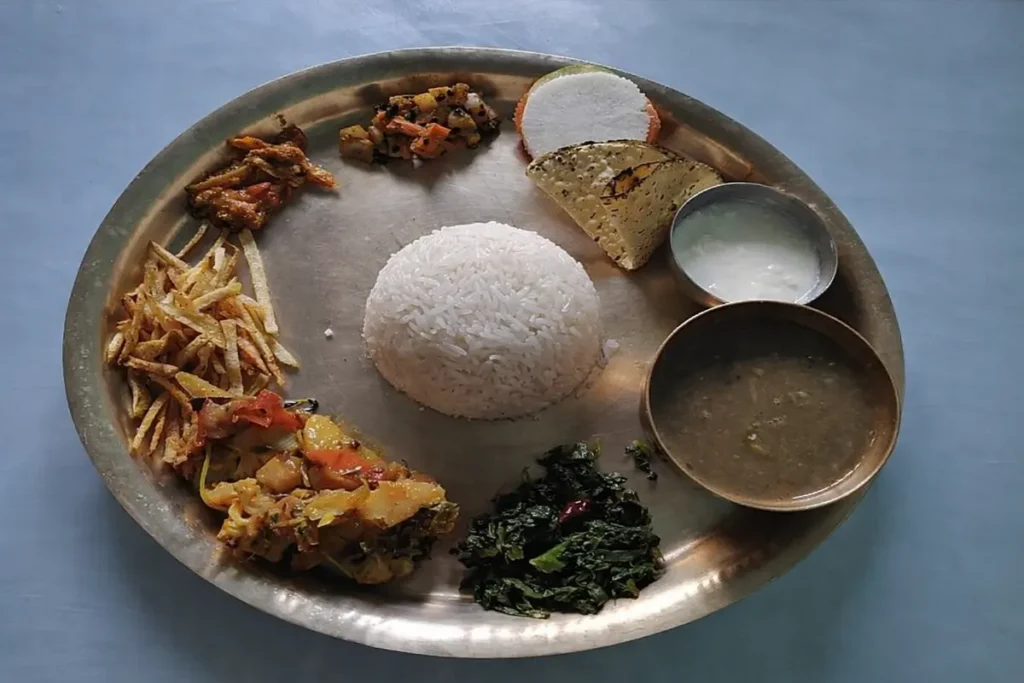
Dal bhat, Nepal’s national dish of steamed rice, lentil soup, and vegetable curry, is a core part of Himalayan trekking culture. Eating it in a family-run Gurung teahouse offers a genuine cultural experience compared to tourist-oriented lodges.
In villages like Ghandruk and Siding, dal bhat is made from locally grown rice, lentils, and seasonal vegetables, with spice blends unique to each household. It is served thali-style on a large metal tray, with unlimited refills offered as a sign of hospitality. Refusing a refill can feel socially awkward, while accepting it graciously shows cultural respect.
Local Gurung Foods to Try on the Trail
Beyond the standard dal bhat, the Mardi Himal Trek offers authentic Gurung culinary experiences:
- Dhedo: A thick porridge made from buckwheat or millet flour, traditionally eaten before rice became the main staple. Commonly prepared in family kitchens in Ghandruk and Lwang.
- Gundruk: Fermented leafy greens used in soups or as a condiment, giving meals a distinctive sour flavor and a classic Nepali taste.
- Tongba: A warm, fermented millet drink served in a wooden or bamboo vessel and sipped through a straw, perfect for high-altitude warming in teahouses along the upper trail.
Festivals You Might Experience on the Mardi Himal Trek
Dashain and Tihar in Gurung Villages
Dashain, Nepal’s most important Hindu festival, falls in October, right in the peak autumn trekking season on the Mardi Himal Trek. In Gurung villages, it blends Hindu rituals with local traditions. During the tika ceremony, elders apply red paste and rice grains to foreheads, welcoming respectful visitors with warmth.
Tihar, the festival of lights, follows about two weeks later. Villages like Ghandruk and Siding glow with oil lamps and flower decorations, creating magical evening experiences for trekkers. Timing your trek during Dashain and Tihar adds a cultural richness that goes far beyond museums or staged experiences.The best month for the Mardi Himal Trek guide covers exactly how festival timing aligns with the optimal trekking windows of the year..
Losar – Tibetan Buddhist New Year in the Annapurna Region
Losar, the Tibetan Buddhist New Year, falls in late January or February according to the Tibetan lunar calendar. In the upper Annapurna foothills, it is celebrated with monastery ceremonies, community feasts, traditional music, and the hanging of new prayer flags.
Trekkers on the Mardi Himal Trek during Losar experience one of the most intimate and authentic festival encounters in the Nepal Himalaya. With near-empty trails, snow-dusted landscapes, and celebrations in local Gurung teahouses, the trek offers a unique cultural and winter experience. rekkers considering this winter window should review what the Mardi Himal Trek in winter actually involves before planning a Losar-season departure.
How to Engage Respectfully with Local Culture
- Dress modestly: Cover shoulders and knees in villages, monasteries, and teahouses. This applies to all genders and shows respect in both Hindu and Buddhist spaces.
- Ask before photographing: Gurung communities are living their daily lives, not performing for tourists. A polite gesture or smile before taking photos is essential.
- Remove footwear: Always take off shoes before entering monasteries, teahouse living areas, or homes. This simple act is widely appreciated.
- Learn basic Nepali phrases: Greetings like Namaste, thanks with Dhanyabad, and appreciation for food with Mitho chha build warmth with hosts.
- Buy directly from local producers: Purchase handicrafts and foods in Ghandruk and Lwang instead of tourist shops in Kathmandu or Pokhara. Items like woven Radi textiles and hand-carved crafts support the community and cultural traditions.
- Consider a cultural guide: Even if not mandatory, a knowledgeable guide can provide context, connect you with locals appropriately, and enrich your cultural experience beyond independent trekking.
Why the Mardi Himal Trek Offers Better Cultural Access Than Crowded Trails
The Mardi Himal Trek offers better cultural access because it is less crowded and less commercial than popular routes like the Annapurna Circuit and Poon Hill. This means cultural experiences here feel more real, personal, and closely connected to local life.
To make it clearer, here’s a simple comparison:
| Feature | Mardi Himal Trek | Annapurna Circuit / Poon Hill |
| Crowds | Low, peaceful trails | Very crowded in peak season |
| Tourism Level | Light, less commercial | Highly commercialized |
| Teahouses | Family-run, local homes | Business-focused lodges |
| Cultural Experience | Natural and authentic | Often structured for tourists |
| Road Access | Limited | Extensive road access (especially Annapurna Circuit) |
| Interaction | Personal and genuine | More transactional |
Unlike the busy trails, the Mardi Himal Trek still offers a rare chance to experience real village life. However, as its popularity grows, this authenticity may slowly change—making now the best time to experience it. A direct comparison of the Mardi Himal Trek and Annapurna Base Camp Trek makes the cultural distinction between these two routes immediately clear.
Conclusion
The Mardi Himal Trek offers a rare cultural experience that many Himalayan routes have already lost. Villages like Ghandruk, Siding, and Lwang still preserve authentic Gurung traditions in daily life, food, and community practices. Along the trail, monasteries and prayer flags reflect a deep spiritual connection to the mountains, adding meaning beyond the scenery.
However, this level of authenticity may not last forever. As tourism grows, cultural experiences can become more commercial. Trekking Mardi Himal now gives you a chance to see real village life and traditions in their natural form making it not just a trek, but a true cultural journey. The Mardi Himal Trek review from those who have already walked it speaks to the cultural dimension as consistently as it does to the mountain views.
FAQs
What language do Gurung people speak?
The Gurung people speak Gurung, also known as Tamu Kyui, as their community language. Nepali is widely used as a common language on the trail, and English is spoken at basic to moderate levels in places like Ghandruk, but less in smaller villages such as Siding and Lwang.
Can I visit a Gurung monastery?
Yes. The monastery in Ghandruk is open to respectful visitors. You should remove your shoes, stay quiet, and ask permission before taking photos. Making a small donation is appreciated.
Is Mardi Himal Trek good for cultural travel?
Yes. The Mardi Himal Trek is ideal for cultural tourism. It offers rich village life, local traditions, and beautiful landscapes, even if you do not go to higher altitudes.
What cultural rules should I follow?
Walk clockwise around stupas, remove shoes in religious places, ask before taking photos, and dress modestly. Avoid pointing your feet toward people, sacred objects, or the fire, as it is considered disrespectful.